 SecurityZines.com
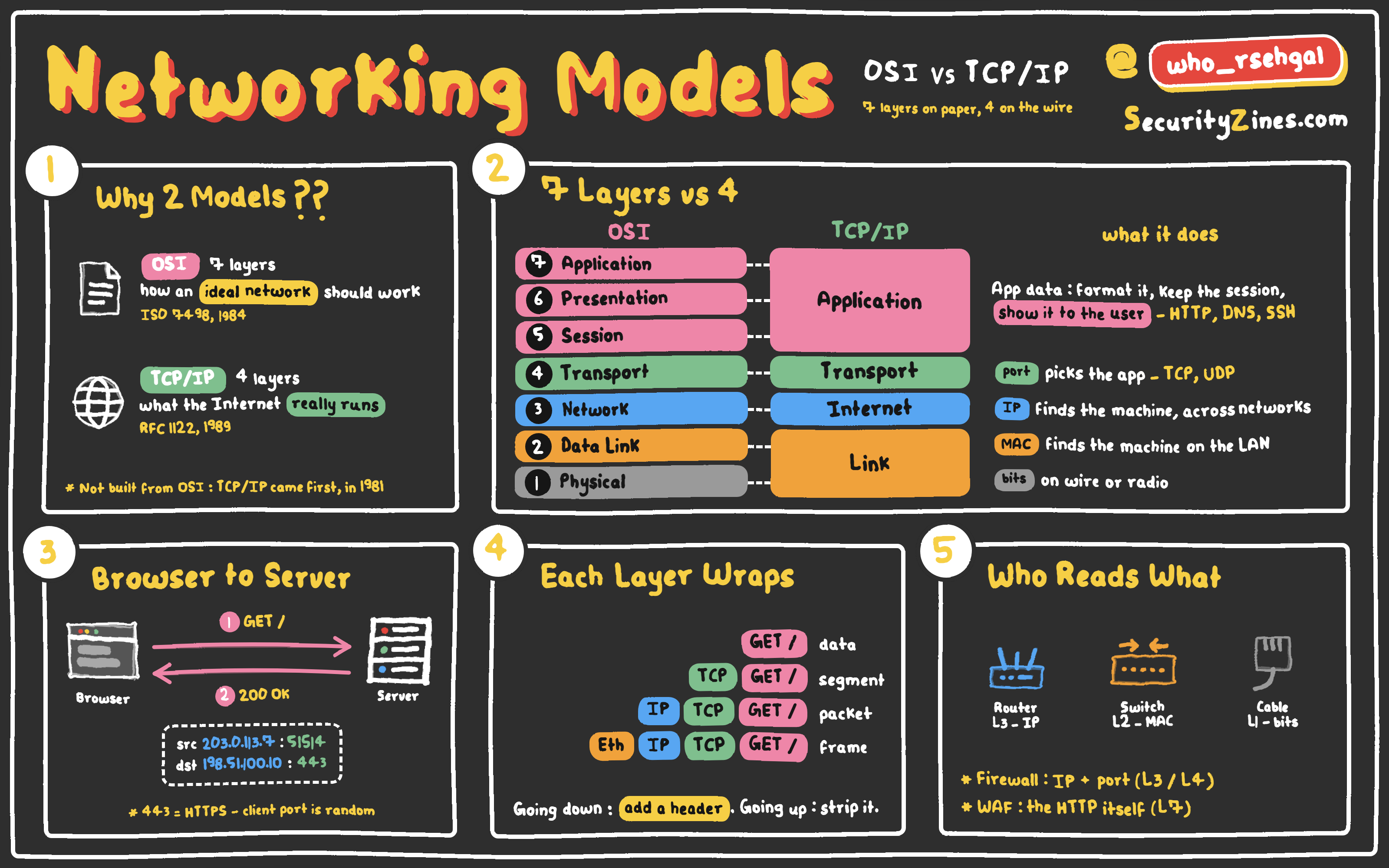
Networking Models - OSI vs. TCP/IP
What Are Networking Models? Networking models provide frameworks for understanding how data is transferred between systems in a network. The OSI (Open Systems Interconnection) model and the TCP/IP model are the two most commonly referenced frameworks in networking.
OSI Model: The OSI model consists of seven layers: Physical, Data Link, Network, Transport, Session, Presentation, and Application. Each layer handles a specific aspect of data transmission, providing a structured approach to troubleshooting and network design.
TCP/IP Model: The TCP/IP model, on the other hand, simplifies the OSI model into four layers: Link, Internet, Transport, and Application. It is the foundation of the internet, focusing on protocols for routing and addressing, as well as ensuring reliable data delivery.
Why It Matters: Understanding these models helps in designing, troubleshooting, and securing network communication. The OSI model offers a more detailed approach to network operations, while the TCP/IP model is more streamlined and closely aligned with real-world implementation.
Common Use Cases: The OSI model is valuable in theoretical network design and teaching, while the TCP/IP model is used practically to build and manage the internet and intranet systems.
Both models are fundamental to understanding how data travels across networks and how to secure and optimize these processes.