 SecurityZines.com
HTTP Request Smuggling
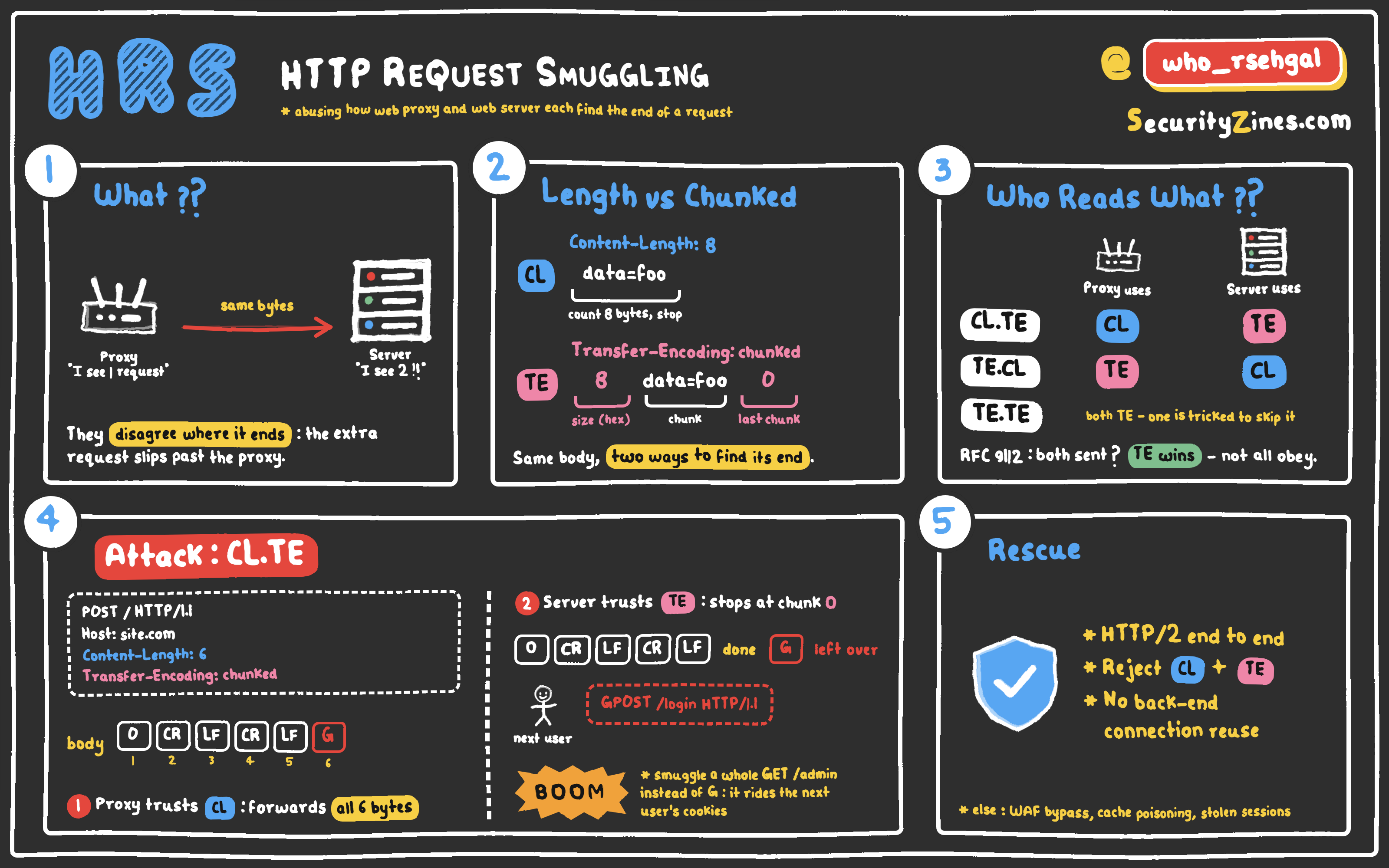
What is HRS Smuggling? HTTP Request Smuggling (HRS) is an attack where attackers exploit differences in the way intermediate servers, like proxies and load balancers, interpret HTTP requests. This allows one request to bypass one server and be processed by another, often going unnoticed, which can be leveraged to bypass security controls or inject malicious payloads.
How It Works: The attacker sends conflicting instructions within the same HTTP request (such as using conflicting `Content-Length` and `Transfer-Encoding` headers) to confuse the web server and intermediaries. This leads to the request being processed differently, enabling the attacker to inject unauthorized actions or bypass security checks.
Why It Matters: HRS smuggling allows attackers to manipulate traffic without detection, potentially leading to unauthorized access, data exfiltration, or exploitation of vulnerabilities in web applications or backend servers. Proper configuration and consistent security measures are crucial for detecting and preventing such attacks.
Common Use Cases: HRS attacks can be used to bypass firewalls, load balancers, and other security mechanisms that rely on specific request processing rules. Attackers may exploit it to send malicious payloads or trigger unauthorized actions without triggering alarms or being detected by security tools.
To mitigate HRS, web application architectures must carefully handle HTTP requests, ensuring that proxies, firewalls, and other intermediaries interpret headers consistently and safely.