 SecurityZines.com
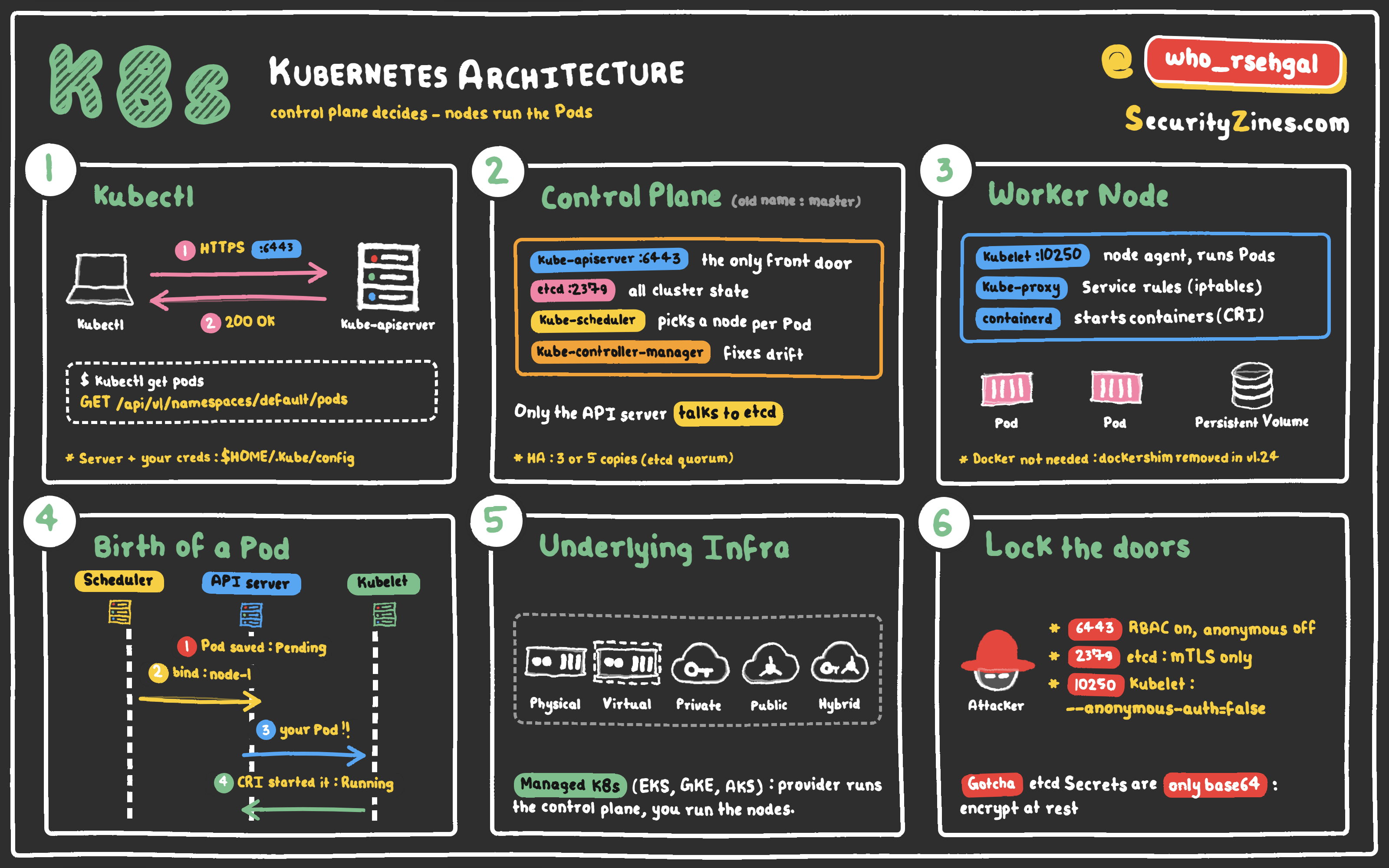
Simplifying Container Orchestration
What is Kubernetes? Kubernetes (often abbreviated as K8s) is an open-source platform for automating the deployment, scaling, and management of containerized applications. It provides a robust framework to manage containerized workloads and services, ensuring high availability and scalability across environments.
How It Works: Kubernetes organizes containers into pods, which are the smallest deployable units. It automatically schedules, manages, and scales containers based on resource needs, making it easier for developers to deploy and maintain applications in diverse environments. Kubernetes abstracts away much of the complexity of managing containers, enabling faster and more reliable application deployment.
Why It Matters: Kubernetes helps organizations deploy complex applications with greater reliability, manage their infrastructure more efficiently, and scale dynamically as needed. It plays a critical role in the DevOps and CI/CD pipeline, making infrastructure management easier while improving application uptime and performance.
Common Use Cases: Kubernetes is used to manage containerized applications across private, public, and hybrid clouds. It is often deployed in microservices architectures, allowing teams to automate scaling, self-healing, and rolling updates, enhancing both developer productivity and system resilience.
By using Kubernetes, organizations can optimize resource usage and maintain the agility required to keep up with modern software demands.