 SecurityZines.com
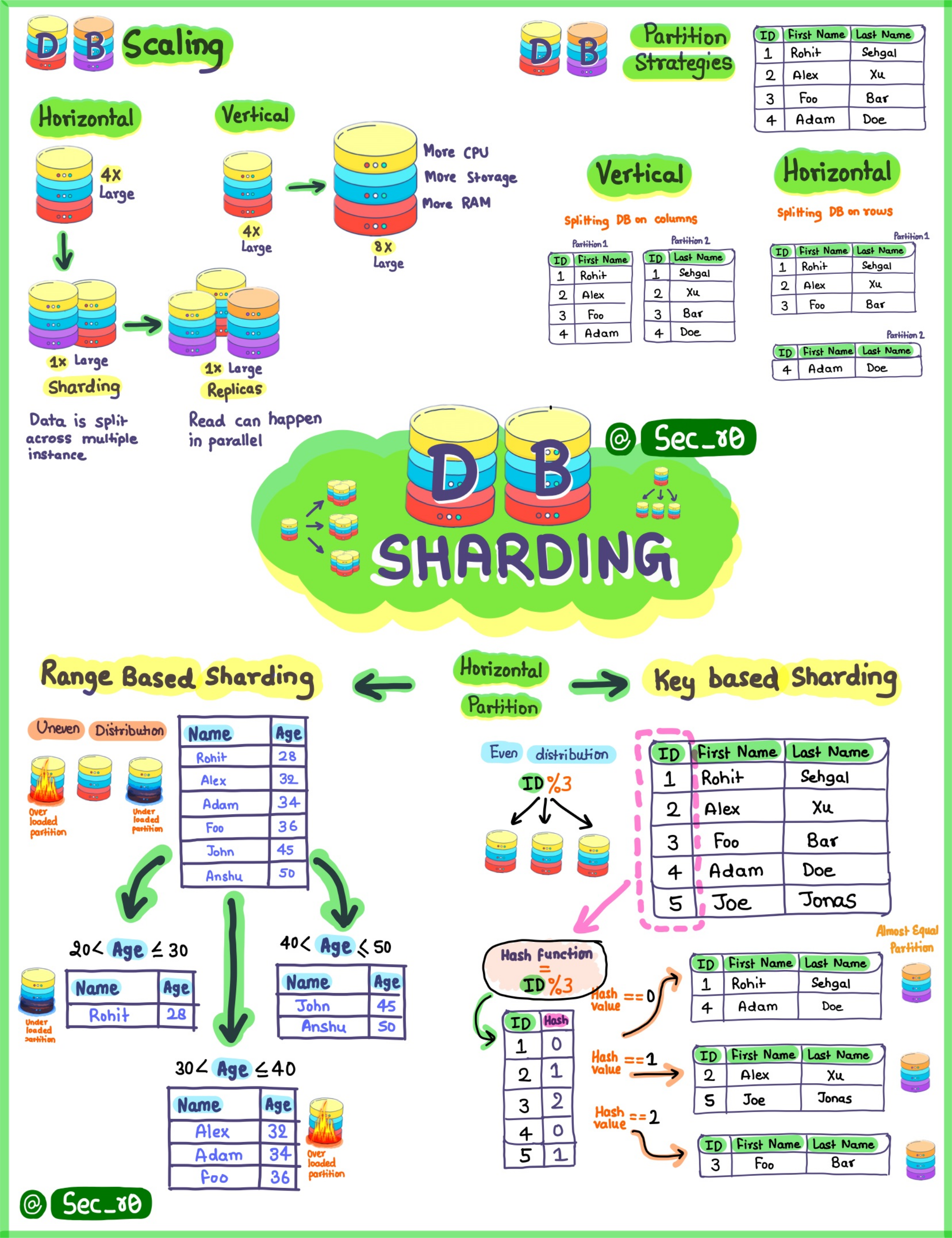
What it is: sharding splits one large table horizontally: each shard holds a subset of the rows on its own server, so reads, writes and storage scale out instead of up.
How rows are placed: by a shard key. Range-based sharding (users A–M, N–Z) keeps ranges together but can create hot spots. Hash-based sharding spreads load evenly but makes range queries touch every shard. Directory-based sharding keeps a lookup table of key to shard.
Why it matters: a bad shard key is hard to change later. Cross-shard joins and transactions get expensive, and rebalancing when you add shards needs planning (consistent hashing helps).