 SecurityZines.com
Understanding Stored XSS (Cross-Site Scripting)
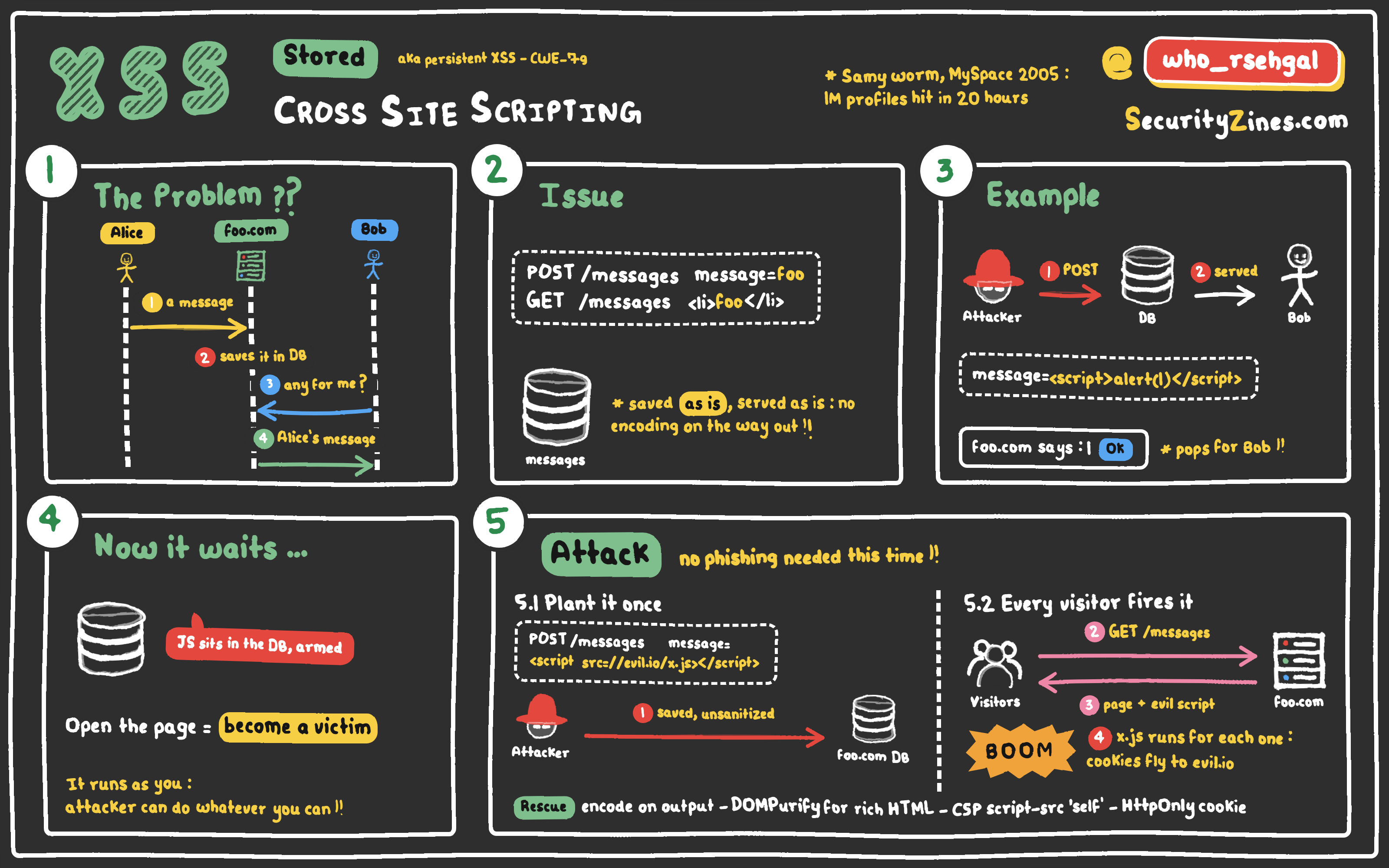
What is Stored XSS? Stored Cross-Site Scripting (XSS) is a web vulnerability where malicious scripts are injected into an application’s database or other persistent storage. These scripts are then served to users without proper sanitization, allowing the attacker to execute arbitrary code in the user's browser.
How Stored XSS Works: An attacker submits a malicious payload (typically JavaScript) via input fields, which the application stores in its database. When a victim accesses the compromised page, the stored script is executed in their browser. This can lead to session hijacking, data theft, or redirecting users to malicious websites.
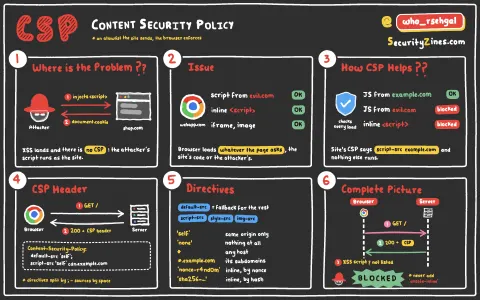
Prevention: - Sanitize User Input: Use proper escaping mechanisms and input validation to avoid script execution. - Content Security Policy (CSP): Implement a CSP header to mitigate the risk of executing malicious scripts. - Use Safe APIs: Avoid using `eval()` and similar unsafe JavaScript methods.